Sold Price vs. Asking Price: What Windsor Home Buyers Need to Know
 admin
admin 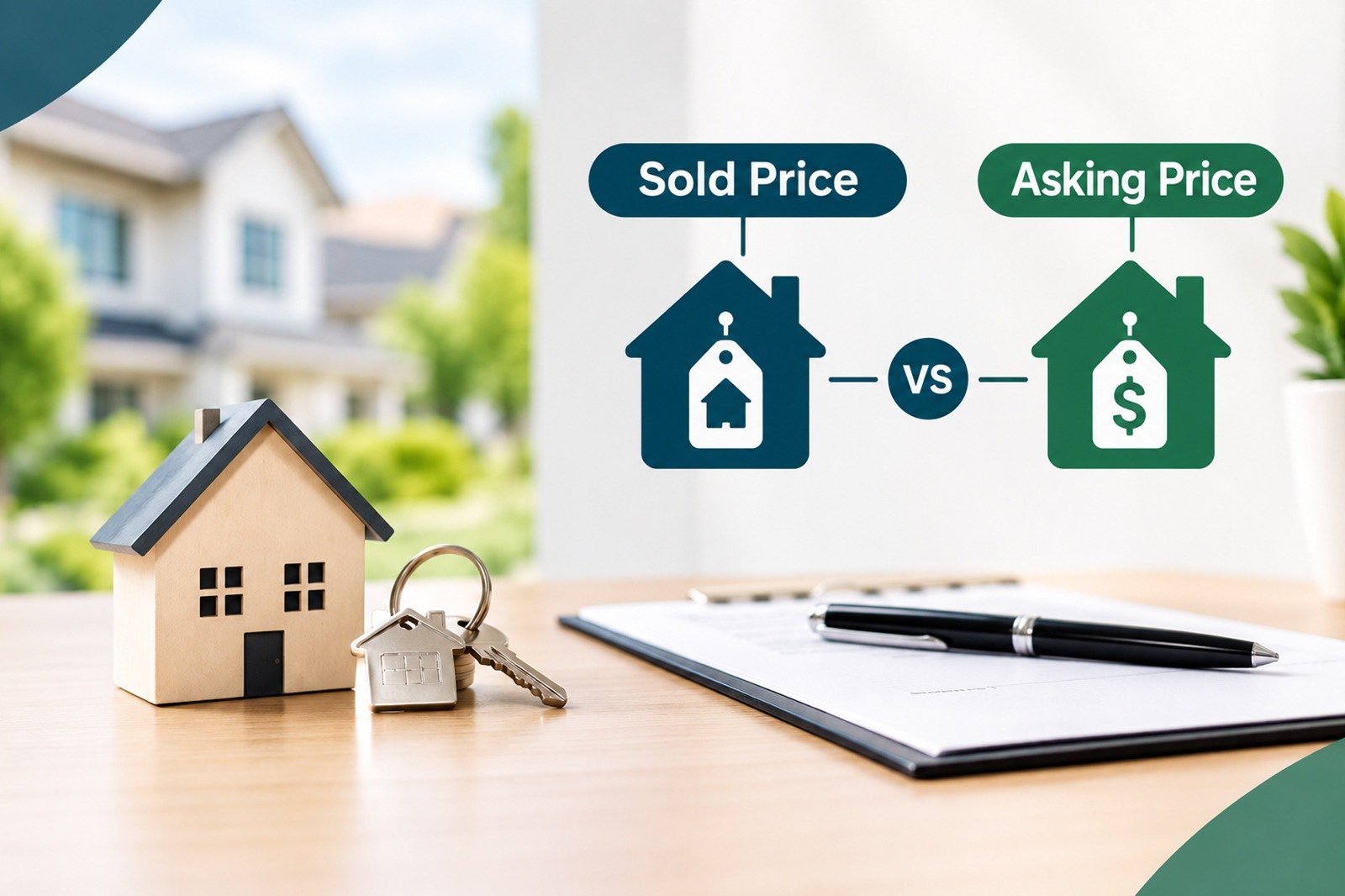

When searching for homes in Windsor, Ontario, you will usually see an asking price displayed on each property listing. However, the asking price is not necessarily the amount a buyer ultimately pays.
Understanding the difference between a property’s asking price and its final sale price can help you evaluate listings, compare comparable homes, and prepare for negotiations.
This distinction is particularly important when you are deciding whether a property fits your budget or trying to determine whether its listed price is supported by comparable sales.
An asking price is the amount a seller advertises when offering a property for sale.
The seller may establish this price after considering comparable sales, property condition, market conditions, and personal selling objectives. A real estate professional may help the seller evaluate these factors when developing a pricing strategy.
However, an asking price is not proof of a property’s market value. It is the starting point for potential negotiations and may change while the property is listed.
For example, a home advertised for $550,000 is being offered at that price. This does not establish that a buyer will pay $550,000 or that the property is worth exactly that amount.
The final sale price is the price recorded for a completed property transaction.
It may be higher than, lower than, or equal to the original asking price. The outcome depends on factors such as buyer interest, competing properties, property condition, negotiations, and the terms of the transaction.
It is important to compare verified completed sales with similar properties rather than assume every listing sells at its advertised price.
When several buyers are interested in the same property, competition may influence the offers submitted.
In other circumstances, a seller may receive limited interest and consider an offer below the asking price.
Neither outcome is guaranteed. Buyer demand can vary between neighbourhoods, property types, and price ranges.
A home that requires significant repairs may attract offers that reflect the anticipated cost and effort of addressing those issues.
Buyers may also consider the condition of the roof, foundation, windows, plumbing, electrical systems, and other major components.
A recently renovated home may appeal to buyers differently, although the amount spent on renovations does not automatically determine the final sale price.
Some sellers list properties at a price intended to attract a broad group of buyers. Others select an asking price based on their assessment of comparable properties and their selling objectives.
A listing price should therefore be interpreted alongside the property’s features and the local market.
The length of time a property remains listed can provide useful context, but it does not explain the final price on its own.
A seller may change the asking price, receive offers with different conditions, or decide not to accept an offer. Buyers should review the available information rather than assume that a longer listing automatically creates an opportunity for a discount.
Follow these practical steps when evaluating a home.
Step 1: Identify comparable properties. Look for homes with similar locations, sizes, layouts, conditions, and property types.
Step 2: Review completed transactions. Where reliable sold-price information is available, compare the final sale prices of similar properties.
Step 3: Check current competition. Active listings help show what other sellers are asking for comparable homes.
Step 4: Consider differences between properties. Renovations, parking, lot size, basement space, and maintenance requirements can affect the comparison.
Step 5: Establish your budget. Include closing costs, potential repairs, insurance, property taxes, and other expenses in your planning.
Step 6: Prepare an informed offer. Consider the available evidence, your financial position, and the terms you are comfortable accepting.
You can begin researching available properties through the Bob Quick listings page.
Sellers can use comparable sale prices to evaluate whether their asking price is realistic.
An asking price that is significantly different from comparable sales may require additional explanation, particularly if the property has features that distinguish it from other homes.
A professional evaluation can help identify relevant comparable properties and provide context for setting an asking price.
If you are preparing to sell in Windsor or the surrounding county, you can request a Free Home Evaluation from Bob Quick.
Not necessarily. The asking price is the seller’s advertised price. Market value is an estimate informed by comparable sales, property characteristics, and market conditions.
Yes. This can happen when buyers compete for a property or when an offer exceeds the advertised price for other reasons. It is not guaranteed.
Yes. Negotiations, property condition, buyer demand, and other circumstances can result in a sale below the original asking price.
Availability varies by property and data source. Consult reliable local real estate information or a real estate professional who can help identify relevant comparable transactions.
Understanding the difference between asking prices and completed sale prices gives buyers and sellers a more useful starting point for evaluating a property.
Explore Bob Quick’s Windsor-area listings or request a home evaluation to discuss the factors that may influence your property’s value.